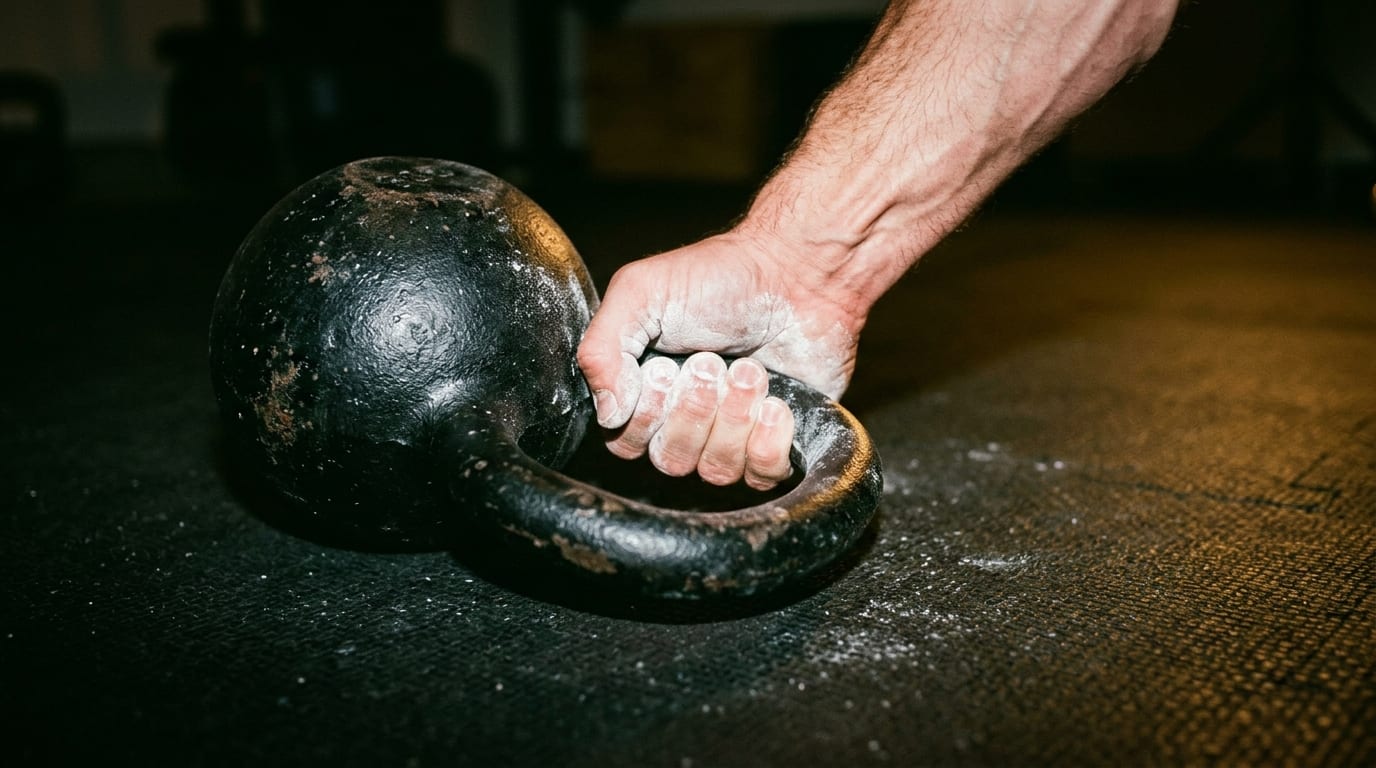
Squeeze a handgrip dynamometer as hard as you can for a few seconds. The number on the dial is one of the cheapest health measures there is. It also turns out to say a lot.
What the research shows
- The PURE study measured grip strength in 139,691 adults in 17 countries and followed them for about four years. Every 5 kg lower grip strength was linked to a 16% higher risk of death from any cause. Grip predicted death from cardiovascular disease better than systolic blood pressure did (Leong et al., 2015).
- The UK Biobank study of about half a million people found that lower grip strength was linked to higher risk of death, heart disease, lung disease and several cancers (Celis-Morales et al., 2018).
Why your hand would matter
It mostly doesn’t, on its own. Grip strength is a marker: it reflects your overall muscle strength, and muscle declines with age, inactivity and illness. A weak grip is a sign worth noticing, not a cause to fix by squeezing a tennis ball. The fix is getting stronger everywhere.
Why 40 is the time to start measuring
Grip strength generally peaks in your 30s and then declines slowly, and faster in later decades (Dodds et al., 2014). The aim is to notice your own decline early and slow it, not to beat a chart.
How to test it
- Use a hand dynamometer. Many gyms and clinics have one, and basic models are inexpensive.
- Stand with your arm at your side, elbow slightly bent.
- Squeeze as hard as you can for about 3 seconds.
- Do 2–3 tries per hand, resting between, and record your best.
- Repeat monthly, at the same time of day and with the same device.
Ten seconds, once a month. The trend over a year is what to watch.
How to raise it
- Lift heavy things, and carry them. Deadlifts, rows, pull-ups and farmer’s carries (walking while holding something heavy in each hand) train grip as a side effect.
- Train your whole body two or more times a week. That’s what moves the number for the right reasons.
- Don’t skip legs. Grip is the canary. What protects you is strength across the whole body.
This article is general information, not medical advice. A sudden drop in grip strength, numbness or tingling is a reason to see a doctor.
Sources
- Leong DP, et al. Prognostic value of grip strength: findings from the Prospective Urban Rural Epidemiology (PURE) study. Lancet. 2015;386(9990):266–273.
- Celis-Morales CA, et al. Associations of grip strength with cardiovascular, respiratory, and cancer outcomes and all cause mortality: prospective cohort study of half a million UK Biobank participants. BMJ. 2018;361:k1651.
- Dodds RM, et al. Grip strength across the life course: normative data from twelve British studies. PLoS One. 2014;9(12):e113637.