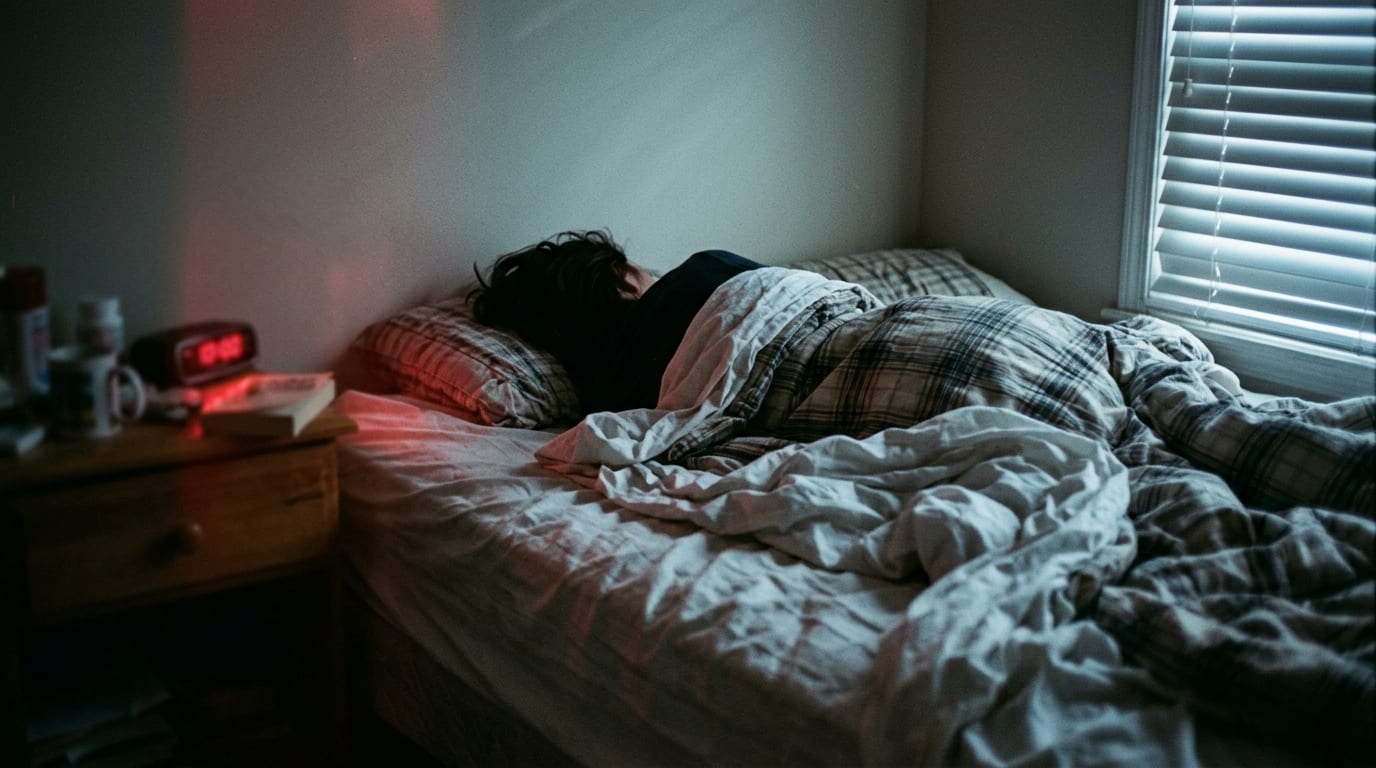
You know a bad week of sleep makes you tired and hungry. It also changes how your body handles sugar, and faster than most people expect.
The one-week experiment
Researchers had 20 healthy young men sleep about five hours a night for one week, then measured how well their bodies responded to insulin, the hormone that moves sugar out of the blood. Their insulin sensitivity fell by roughly 20% (Buxton et al., 2010). Lower insulin sensitivity means the body needs more insulin to keep blood sugar in check. When it stays low for years, it’s a path towards type 2 diabetes.
Earlier work found something similar. In a classic study, young men slept four hours a night for six nights. Afterwards their bodies cleared sugar from the blood about 40% more slowly, closer to what’s typical of much older adults (Spiegel et al., 1999).
The effect even shows up after a single short night. One study found insulin sensitivity fell measurably in healthy people after just one night of about four hours’ sleep (Donga et al., 2010).
What these studies do and don’t show
They’re small lab studies, mostly in young men, with sleep restricted on purpose. They show that short sleep quickly impairs blood-sugar control, and that it’s measurable within days. They don’t show that one bad week gives anyone diabetes. In these studies the effects largely reversed with normal sleep.
The risk is a lifestyle of short sleep, week after week.
What to do with this
- Protect a sleep window of 7+ hours most nights. Set a consistent wake time, and work backwards from it.
- After a bad night, move. Walking after meals helps your muscles take up sugar without needing as much insulin.
- Expect to be hungrier, and plan for it. Short sleep shifts appetite hormones, and the snack cupboard knows.
- Don’t try to make up a week in one weekend. Recovery sleep helps, but consistency is what protects you.
If you snore loudly, wake up gasping, or feel exhausted despite enough hours in bed, ask your doctor about sleep apnea. It’s common and treatable.
This article is general information, not medical advice.
Sources
- Buxton OM, et al. Sleep restriction for 1 week reduces insulin sensitivity in healthy men. Diabetes. 2010;59(9):2126–2133.
- Spiegel K, Leproult R, Van Cauter E. Impact of sleep debt on metabolic and endocrine function. Lancet. 1999;354(9188):1435–1439.
- Donga E, et al. A single night of partial sleep deprivation induces insulin resistance in multiple metabolic pathways in healthy subjects. J Clin Endocrinol Metab. 2010;95(6):2963–2968.